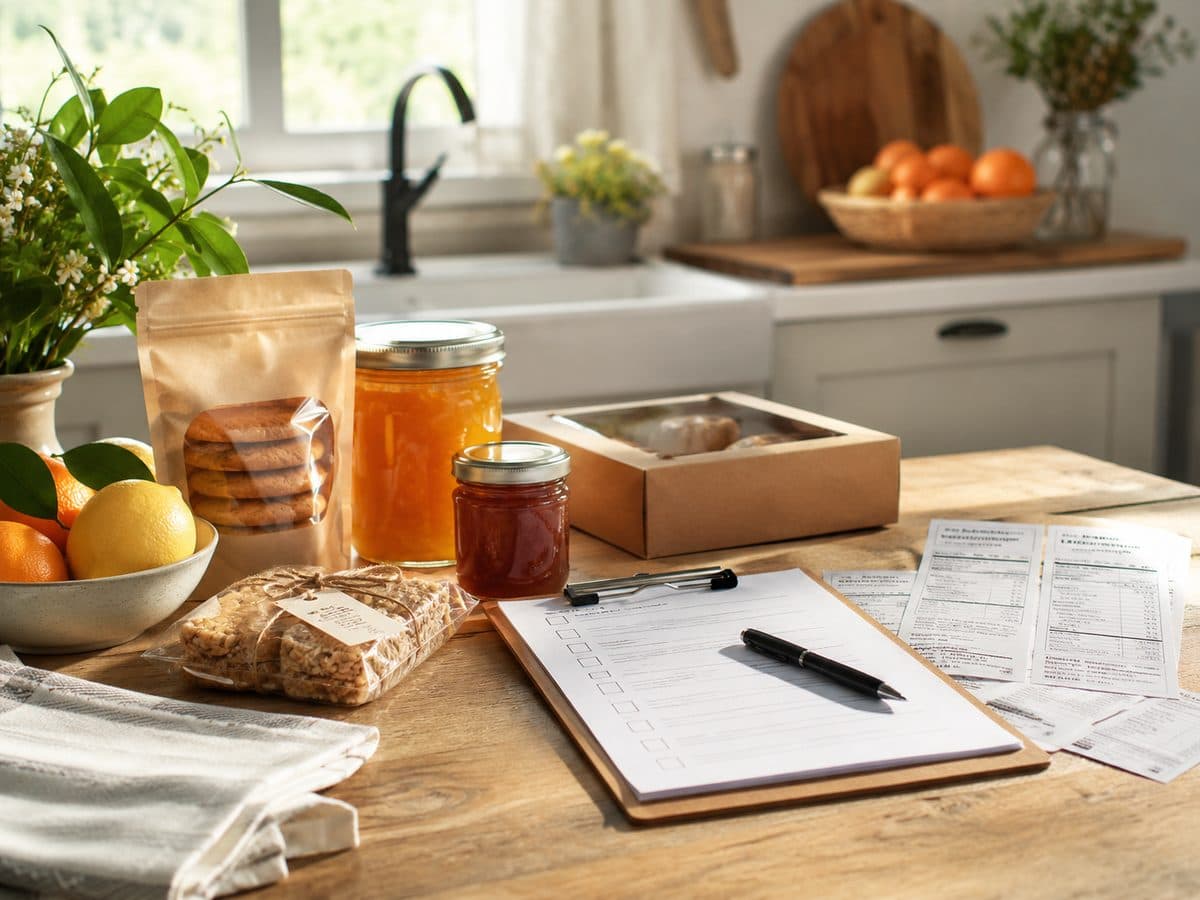
What is a Cottage Food Operation?
A cottage food operation is a home-based food business that produces and sells certain food products directly to consumers. Florida's cottage food law (Florida Statute 500.80) allows individuals to prepare and sell specific foods from their home kitchen without needing a food establishment license.
Annual Sales Limits
Current limit: $250,000 per year (increased from $50,000 in 2021)
This significant increase in the sales cap has made cottage food operations a viable full-time business option for many Floridians.
Allowed Products
Florida cottage food operations may sell:
Baked Goods
- Breads, rolls, and biscuits
- Cakes and cupcakes
- Pastries and cookies
- Pies (must be non-potentially hazardous)
- Brownies and bars
Candies and Confections
- Fudge
- Hard candy
- Brittle
- Caramels
- Chocolate-covered items (with restrictions)
Dry Goods
- Granola and trail mix
- Dry pasta
- Popcorn
- Coated or seasoned nuts
Preserved Foods
- Jams and jellies
- Fruit butter
- Pickles (with pH requirements)
- Dried fruits
Other Items
- Honey and honeycomb
- Cereals
- Vinegar
- Mustard
Prohibited Products
You cannot sell:
- Foods requiring refrigeration
- Low-acid canned goods
- Meat, poultry, or fish products
- Dairy products (except in baked goods)
- Raw seed sprouts
- Juices
- Cut fresh fruits or vegetables
Labeling Requirements
Every cottage food product must have a label with:
- Business name and address - Your registered business name and complete physical address
- Product name - Clear identification of what's in the package
- Ingredients list - Listed in descending order by weight
- Net weight or volume - In both metric and standard units
- Allergen warnings - If product contains any of the 8 major allergens
- Required disclaimer - Must state: "Made in a cottage food operation that is not subject to Florida's food safety regulations"
Where You Can Sell
Cottage food products may be sold:
- Directly to consumers (face-to-face)
- At farmers markets
- At roadside stands
- At county fairs
- From your home
- Through mail order (within Florida)
- Online (with restrictions)
Where You Cannot Sell
- Wholesale to stores or restaurants
- To schools or institutions
- Outside of Florida
- Through third-party delivery services
Food Safety Best Practices
While not required by law, following food safety practices protects your customers and your business:
- Keep your kitchen clean - Sanitize all surfaces before and after production
- Proper hand washing - Wash hands frequently during food preparation
- Pest control - Keep pets and pests away from production areas
- Ingredient storage - Store ingredients properly to prevent contamination
- Temperature control - Monitor temperatures during baking
- Allergen awareness - Prevent cross-contamination between allergens
Getting Started Checklist
- Review the complete Florida Cottage Food Law
- Determine if your products are allowed
- Create your labels with all required information
- Set up your home kitchen for production
- Obtain a business license (check local requirements)
- Consider liability insurance
- Set your pricing using a cost calculator
- Find your sales channels (farmers markets, online, etc.)
Resources
- Florida Statute 500.80
- Florida Department of Agriculture
- Use our free Label Generator
- Calculate your costs
Frequently Asked Questions
Do I need a business license?
While the state doesn't require a special cottage food license, you may need a local business license depending on your city or county. Check with your local government.
Do I need to get my kitchen inspected?
No. Cottage food operations are not subject to routine inspections. However, the state can investigate if there's a complaint.
Can I sell at multiple farmers markets?
Yes! You can sell at as many locations as you want, as long as all sales are direct to consumers and within Florida.
Do I need liability insurance?
It's not required by law, but it's highly recommended. Many farmers markets require vendors to have insurance.
Can I ship my products?
You can ship within Florida to individual consumers. You cannot ship outside of Florida.