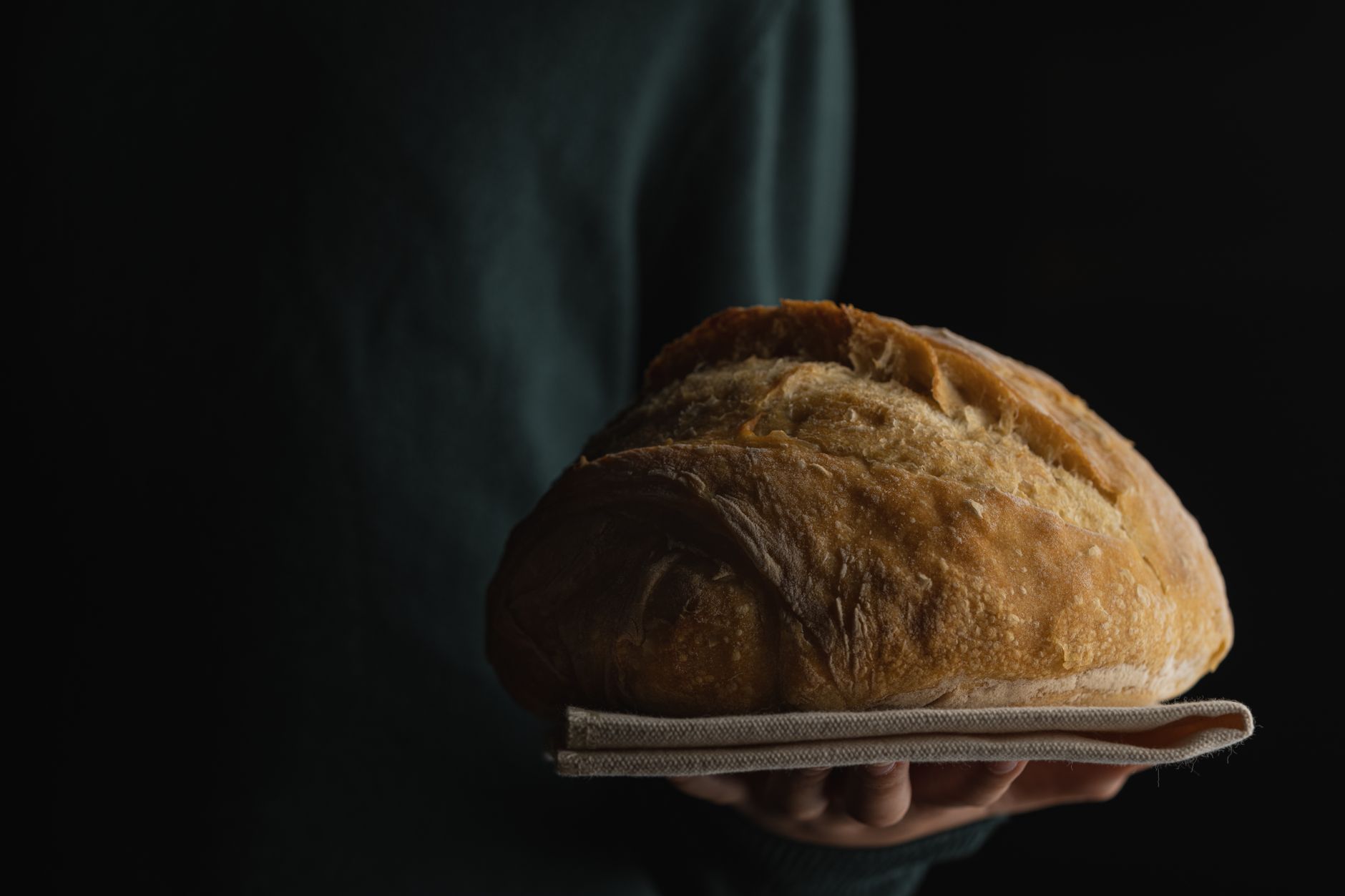
You already make killer banana bread. Your family fights over the last slice. Your coworkers ask you to bring it to every potluck. What if that same recipe could put an extra $2,000 in your pocket every month? Under Florida's cottage food law, you can sell homemade baked goods directly to consumers with no license, no commercial kitchen, and no health department inspections -- up to $250,000 per year. Banana bread is one of the single best products to start with, and this guide will show you exactly why and how.
The Bottom Line
Cost per loaf: $2.50-$3.50
Selling price: $12-$18 per loaf
Profit margin: 70-80%
To hit $2,000/month: Bake ~6 loaves per day, 7 days a week (about 2 hours of work per batch of 4)
What You'll Learn
- • Why Banana Bread Is the Perfect Starter Product
- • The Basic Recipe That Works
- • Exact Costing Breakdown Per Loaf
- • Variations That Command Premium Prices
- • Production Math: How to Hit $2,000/Month
- • Equipment You Need (With Links)
- • Florida Labeling Requirements
- • Where to Sell
- • Marketing Tips That Actually Work
- • Scaling Up: When and How to Grow
Why Banana Bread Is the Perfect Starter Product
Of all the cottage food products you could sell, banana bread has an almost unfair combination of advantages. Here's why it beats nearly every other baked good as a first product:
Universally Loved
Banana bread is a comfort food with near-universal appeal. Unlike niche items like macarons or gluten-free products, almost everyone buys banana bread. Your customer base is massive from day one.
Dirt-Cheap Ingredients
Overripe bananas are often discounted or even free. Flour, sugar, eggs, and butter are pantry staples. Your ingredient cost per loaf is one of the lowest of any baked good, which means fat margins.
Long Shelf Life
A properly wrapped banana bread loaf stays fresh for 3-4 days at room temperature and up to a week refrigerated. Compare that to decorated cookies that need to be sold the same day. Less waste equals more profit.
Low Skill Barrier
No piping bags. No fondant. No decorating skills. If you can stir batter and set a timer, you can make a loaf that customers will pay $15 for. This is the most forgiving baked good there is.
Pro Tip
Ask your local grocery store produce department if they have overripe bananas they're about to throw out. Many stores will sell you a whole case of spotted bananas for $2-3. Some will give them to you for free. This alone can cut your ingredient cost by 30%.
The Basic Recipe That Works for Cottage Food
You probably already have a banana bread recipe you love. Use it. But if you're starting from scratch, here's a straightforward recipe that produces a consistently moist, flavorful loaf that customers rave about. This makes one standard 9x5 loaf:
King Arthur Baking flour
Consistent protein content = consistent loaves — which matters when customers expect the same result every time. Shop flours & baking mixes →
Classic Cottage Food Banana Bread
Ingredients
- Ripe bananas (mashed)3 large
- All-purpose flour1.5 cups
- Granulated sugar3/4 cup
- Unsalted butter (melted)1/3 cup
- Egg1 large
- Vanilla extract1 tsp
- Baking soda1 tsp
- Saltpinch
Directions
- Preheat oven to 350 degrees F. Grease a 9x5 loaf pan.
- Mash bananas in a large bowl until smooth.
- Mix in melted butter, sugar, egg, and vanilla.
- Add baking soda and salt, stir to combine.
- Fold in flour until just combined -- do not overmix.
- Pour into prepared pan and bake 55-65 minutes.
- Cool in pan for 10 minutes, then transfer to a wire rack.
- Cool completely before packaging (at least 1 hour).
Cottage Food Tip
Consistency is everything when you're selling. Measure by weight, not volume. A $15 kitchen scale will ensure every loaf is identical. Customers come back for products that taste exactly the same every time.
Exact Costing Breakdown Per Loaf
This is where banana bread really shines. Let's break down exactly what each loaf costs you to make, based on standard grocery store prices in Florida:
| Ingredient | Amount per Loaf | Cost |
|---|---|---|
| All-purpose flour | 1.5 cups (6.4 oz) | $0.30 |
| Granulated sugar | 3/4 cup (5.3 oz) | $0.25 |
| Unsalted butter | 1/3 cup (2.7 oz) | $0.70 |
| Ripe bananas | 3 large | $0.60 |
| Egg | 1 large | $0.35 |
| Vanilla extract | 1 tsp | $0.20 |
| Baking soda | 1 tsp | $0.03 |
| Salt | pinch | $0.01 |
| Packaging (bag + label) | 1 set | $0.35 |
| Total Cost Per Loaf | $2.79 | |
Sell at $12/loaf
$9.21
profit per loaf (77%)
Sell at $15/loaf
$12.21
profit per loaf (81%)
Sell at $18/loaf
$15.21
profit per loaf (85%)
Where to Price Yours
If you're selling at farmers markets, $12-$15 is the sweet spot for a standard loaf. Selling online or via delivery, you can charge $15-$18 because of the convenience factor. Premium variations (chocolate chip, walnut) should always be priced $3-$5 higher. Never price below $12 -- it devalues your product and your time.
Production Math: How to Hit $2,000/Month
Let's work backwards from the goal and figure out exactly what your weekly schedule looks like:
The Math at $15/Loaf
What Does 6 Loaves a Day Look Like?
Batch size: 4 loaves per batch (quadruple the recipe, use 4 loaf pans)
Batch time: ~15 min prep + 60 min baking + 60 min cooling = about 2 hours 15 min
Batches per week: ~10.5 batches (2 batches most days, 1 batch on rest day)
Weekly time commitment: About 22-25 hours including packaging
Verdict: Very doable as a part-time operation. Many cottage food makers do this alongside a full-time job by baking in the evenings and on weekends.
Efficiency Tip
Batch your production. Instead of making one batch every day, make 8 loaves (2 batches) on Monday, Wednesday, and Friday, then sell Tuesday, Thursday, and Saturday. This is more time-efficient and gives you rest days. Many successful cottage food bakers work only 3-4 production days per week.
Equipment You Need
You probably own most of this already. Here's the complete equipment list for a banana bread cottage food operation, with our recommended products:
Loaf Pans (4-Pack)
You need at least 4 loaf pans to produce one full batch at a time. Non-stick 9x5 pans with easy-release coating. This 4-pack gets you started making 4 loaves per batch.
Stand Mixer (KitchenAid Artisan)
Not required -- you can mix banana bread by hand. But when you're making 8+ loaves a day, a stand mixer saves your arms and ensures consistent mixing. The KitchenAid Artisan is the industry workhorse.
Cooling Racks (3-Tier)
Proper cooling prevents soggy bottoms and condensation in packaging. A 3-tier rack lets you cool 12+ loaves in minimal counter space. Essential for batch production.
Clear Cellophane Packaging Bags
Professional-looking packaging makes a huge difference in perceived value. Clear bags let customers see your product while keeping it fresh. Tie with a ribbon for a polished look.
Printable Labels (Avery 22806)
Florida requires specific label information on all cottage food products. These Avery labels are waterproof and work with any inkjet printer. Design your labels in Canva for free.
Digital Food Scale
Required for accurate net weight labeling (Florida law) and consistent recipe results. This scale measures in grams and ounces with 0.1g precision. Pay for itself in the first week by eliminating ingredient waste.
Total Equipment Investment
If you already own basic baking supplies: $50-$100 (packaging, labels, and scale).
Starting from scratch with a stand mixer: $350-$450.
This is one of the lowest startup costs of any cottage food product.
Florida Labeling Requirements
Every loaf you sell must have a label with the following information. This is non-negotiable under Florida Statute 500.80:
Sample Label
Classic Banana Bread
Ingredients: Bananas, all-purpose flour, sugar, butter, eggs, vanilla extract, baking soda, salt.
Contains: Wheat, milk, eggs
Net Weight: 16 oz (1 lb)
Produced by: [Your Name]
Address: [Your Home Address, City, FL ZIP]
"Made in a cottage food operation that is not subject to Florida's food safety regulations."
Required Disclaimer
The cottage food disclaimer must appear on every product you sell. The exact wording is: "Made in a cottage food operation that is not subject to Florida's food safety regulations." Missing this statement can result in enforcement action. Use our Label Generator to create compliant labels in minutes.
Allergen Warning
Banana bread contains three of the top eight allergens: wheat, milk (butter), and eggs. If you add walnuts, that adds tree nuts. Always list "Contains" allergens prominently on your label. This protects your customers and your business.
Where to Sell Your Banana Bread
Farmers Markets
The #1 sales channel for cottage food bakers. Booth fees range from $25-$75 per day. A good market day can net you $200-$500 in banana bread sales alone. Banana bread is a consistent top seller at Florida markets.
Best for: Volume sales, building a customer base
Facebook Marketplace & Local Groups
Join local buy/sell groups and neighborhood groups. Post photos of your banana bread with pricing. This is free marketing and can generate consistent weekly orders with zero overhead.
Best for: Pre-orders, no booth fees
Word of Mouth
Never underestimate how far a great banana bread reputation spreads. Tell everyone you know. Bring samples to work, church, your kids' school events. Your first 50 customers will likely come from your existing network.
Best for: Starting out, zero cost
Florida Cottage Foods Platform
List your products on our marketplace to reach customers actively searching for local cottage food in your area. We handle the marketing so you can focus on baking.
Apply as a Maker →Marketing Tips That Actually Work
The "Free Sample" Strategy
Cut a loaf into small sample slices at your farmers market booth. This is the single highest-converting tactic for banana bread sellers. People taste it, their eyes widen, and they buy a whole loaf. Budget 1 loaf for samples per market day ($2.79 cost) -- it will easily generate $100+ in sales. A 35:1 return on investment.
Instagram-Worthy Photos
Banana bread is incredibly photogenic. Slice it to show the interior texture. Photograph it on a wooden cutting board with natural light. Post to Instagram with local hashtags (#FloridaCottageFood, #[YourCity]FoodScene, #HomeBaked). One viral photo can bring in 20+ orders.
Seasonal Variations
Keep your menu fresh and create urgency with limited-time flavors. Pumpkin banana bread in fall. Cranberry banana bread for the holidays. Lemon banana bread in spring. Seasonal items create a "get it before it's gone" mentality that drives impulse purchases and repeat customers.
The Subscription Play
Once you have 10-15 regular customers, offer a weekly subscription: "Fresh banana bread delivered every Saturday for $12/loaf." Subscriptions give you predictable income, predictable production, and zero unsold inventory. This alone can lock in $600-$900/month.
Scaling Up: When and How to Grow
Once you're consistently selling out your banana bread, it's time to think about growth. Here's a natural progression:
Month 1-2: Master Your Classic Loaf
Focus entirely on one product. Perfect the recipe, nail your packaging, learn your production rhythm. Sell at 1 farmers market and through word of mouth. Target: 30-50 loaves/month.
Month 3-4: Add Variations
Introduce chocolate chip and walnut variations. This increases your average order value without adding much complexity -- it's the same base recipe with add-ins. Target: 80-120 loaves/month.
Month 5-6: Add Channels
Start taking online orders through Facebook and the Florida Cottage Foods platform. Add a second farmers market. Launch mini loaves for the holiday season. Target: 150-200 loaves/month ($2,000+).
Month 7+: Diversify Products
Add complementary products: zucchini bread, pumpkin bread, lemon loaves. You already have the equipment, the skills, and the customers. Each new product opens a new revenue stream without starting from scratch.
Ready to Turn Your Banana Bread Into a Business?
Join hundreds of Florida cottage food makers already earning real income from their home kitchens.
Affiliate Disclosure
This article contains affiliate links to Amazon.com. If you purchase products through these links, Florida Cottage Foods may earn a small commission at no extra cost to you. All pricing data, profit margins, and cost estimates are based on real-world market research across Florida farmers markets and direct-to-consumer sales channels as of early 2026. Your actual results will vary based on location, recipe costs, pricing strategy, and sales volume.