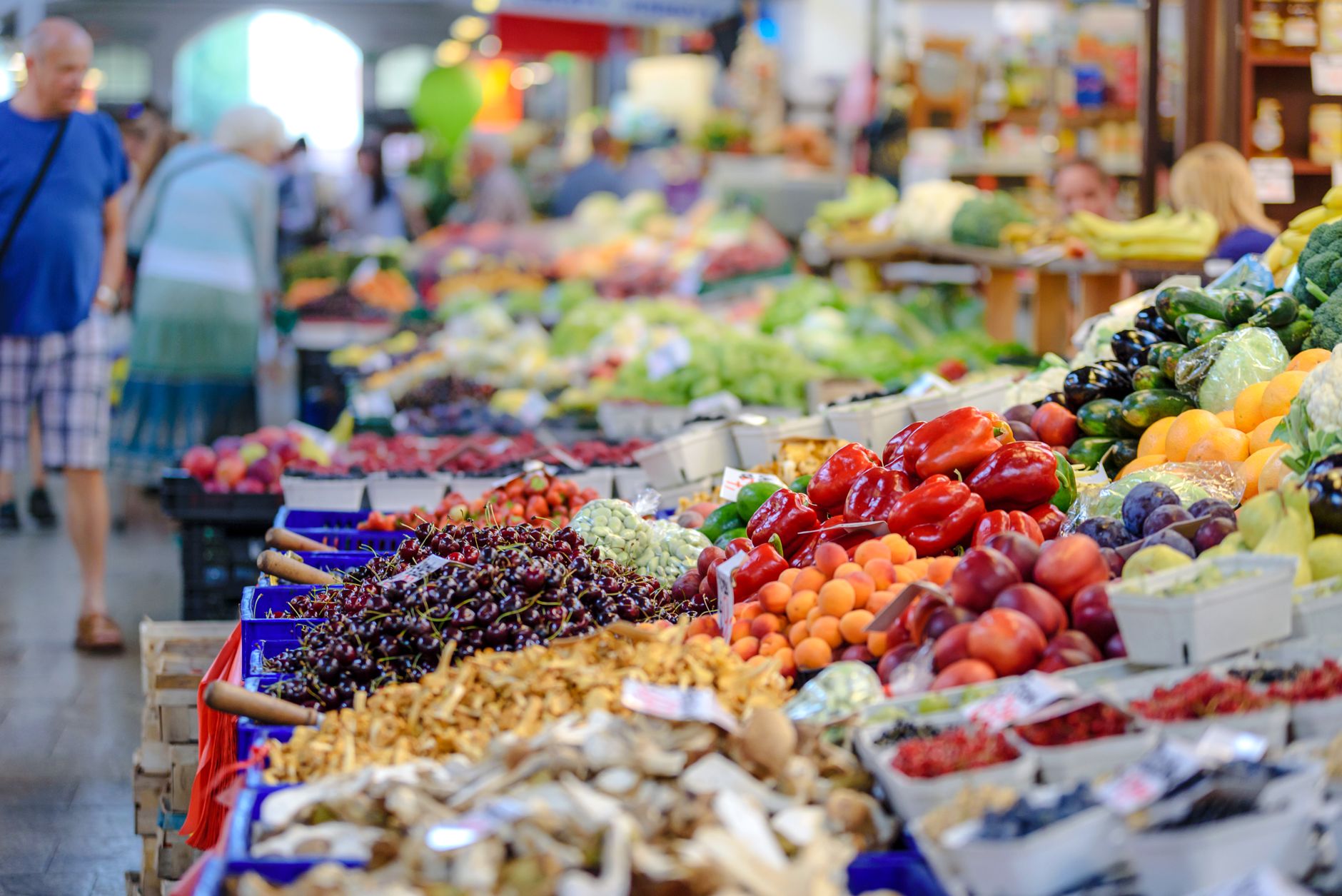
Farmers markets are the #1 sales channel for Florida cottage food operators, and for good reason. They put you face-to-face with customers who are already looking for locally made, handcrafted food products. Whether you bake cookies, jar preserves, or roast granola, a well-run farmers market booth can generate $300-$800 per market day. This guide walks you through every step, from finding the right market to setting up a booth that sells.
Key Takeaway
No license required: Florida cottage food operators can sell at any farmers market without a DBPR food license, health permit, or commercial kitchen. You just need compliant labeling and the required cottage food disclaimer sign.
Typical booth fees: $25-$75 per day or $100-$300 per month.
Startup booth cost: $250-$1,200 depending on your setup level.
What We Cover in This Guide
Florida Farmers Market Basics for Cottage Food Sellers
Before you load up the car, you need to understand where cottage food sellers fit in the farmers market ecosystem. Not all vendors are created equal under Florida law, and knowing the difference will keep you compliant and confident.
Cottage Food Seller vs. DBPR-Licensed Vendor
Cottage Food Seller (You)
- ✓No state license or permit needed
- ✓Produce food in your home kitchen
- ✓No health department inspections
- ✓Sell non-potentially-hazardous foods only
- ✓Annual revenue cap of $250,000
- ✓Must display cottage food disclaimer
DBPR-Licensed Food Vendor
- •Requires DBPR food establishment license
- •Must use a commercial or commissary kitchen
- •Subject to health department inspections
- •Can sell potentially hazardous foods (meat, dairy, etc.)
- •No revenue cap
- •Annual license renewal fees ($200-$500+)
Required: Cottage Food Disclaimer Sign
Every cottage food booth at a farmers market must prominently display a sign with the following statement:
"Made in a cottage food operation that is not subject to Florida's food safety regulations."
This sign must be clearly visible to customers. Many vendors print it on a small placard or include it on their booth banner. Failing to display this sign is one of the few things that can get you in trouble as a cottage food seller.
The Bottom Line
As a cottage food seller, you can walk into virtually any farmers market in Florida, pay the booth fee, and start selling immediately. No waiting for permits, no health inspector visit, no commercial kitchen lease. It is one of the lowest-barrier entry points in the food industry.
Finding the Right Farmers Market
Florida has over 500 active farmers markets. Not all of them are a good fit for cottage food sellers. The right market can mean the difference between $100 and $800 on a Saturday morning. Here is how to find your best match.
Top Florida Farmers Markets by Region
Tampa Bay Area
- • Tampa Saturday Morning Market — Downtown Tampa, 600+ vendors, high foot traffic
- • St. Pete Saturday Morning Market — One of the largest in the Southeast
- • Ybor City Saturday Market — Great for artisan and specialty products
- • Hyde Park Village Market — Upscale clientele, premium pricing opportunity
South Florida / Miami
- • Coconut Grove Organic Market — Saturday mornings, health-conscious shoppers
- • Lincoln Road Farmers Market — Miami Beach, tourist and local mix
- • Yellow Green Farmers Market (Hollywood) — One of the largest in South FL
- • Pinecrest Gardens Farmers Market — Premium neighborhood, loyal customer base
Orlando / Central Florida
- • Orlando Farmers Market at Lake Eola — Every Sunday, 10,000+ weekly visitors
- • Winter Park Farmers Market — Saturday mornings, upscale area
- • Celebration Farmers Market — Tourist-friendly, weekend traffic
- • Avalon Park Farmers Market — Family-oriented neighborhood market
Jacksonville / Northeast Florida
- • Riverside Arts Market (RAM) — Under the Fuller Warren Bridge, massive crowds
- • Jacksonville Beach Farmers Market — Seasonal, great beach town atmosphere
- • St. Augustine Amphitheatre Farmers Market — Saturdays, tourist traffic
Southwest Florida
- • Third Street South Farmers Market (Naples) — Affluent clientele, premium pricing
- • Cape Coral Farmers Market — Growing community, loyal regulars
- • Sarasota Farmers Market — Year-round Saturday market downtown
How to Apply for a Booth
- 1Visit the market first. Walk the market as a customer. Note the types of vendors, foot traffic, and whether other cottage food sellers are present.
- 2Find the market manager. Most markets have a website or Facebook page with vendor application info. If not, ask any vendor who manages the market.
- 3Submit your application. You will typically need: your name, business name, product list, product photos, and proof of liability insurance (some markets require it).
- 4Start as a day vendor. Many markets allow you to pay per day ($25-$75) before committing to a monthly or seasonal spot ($100-$300/month).
Typical Booth Fees
Smaller community markets tend to be on the low end ($25-$40/day), while popular urban markets with high foot traffic charge premium rates. The higher fee is almost always worth it if the market draws more customers.
Build Your Online Presence Too
A farmers market booth is powerful, but pairing it with an online listing multiplies your reach. Customers who discover you at the market can find you online between market days. Browse our vendor directory to see how other Florida cottage food sellers present themselves, and consider getting listed to capture online traffic year-round.
Booth Setup & Equipment Checklist
Your booth is your storefront. A professional, inviting setup signals quality and builds trust with customers before they even taste your product. Here is exactly what you need, with links to proven products.
Essential Booth Equipment
10x10 Pop-Up Canopy Tent
Your most important investment — shade, rain protection, and professional look
A must-have for every outdoor market. Look for one with UV protection (Florida sun is brutal), a steel or aluminum frame, and sidewall options. Most markets require a 10x10 footprint. Bring weights or stakes since Florida wind is unpredictable.
See 10x10 Pop-Up Canopy on Amazon →6ft Folding Table
Sturdy, portable display surface
A standard 6-foot folding table gives you plenty of display space. Get a solid plastic-top table that can handle weight and won't wobble. Some vendors bring two tables (one for display, one behind for inventory).
See 6ft Folding Table on Amazon →Fitted Tablecloth / Runner
Clean, professional appearance that hides under-table storage
A fitted tablecloth transforms a folding table into a professional display surface. Choose a solid color that complements your branding. Fitted styles stay put in the wind and drape neatly to hide storage bins underneath.
See Fitted Tablecloth on Amazon →Display Risers / Stands
Create height variation to catch the eye
Height variation is the single most important merchandising trick. Wooden crates, acrylic risers, or tiered display stands draw the eye across your entire table instead of leaving everything flat at one level.
See Display Risers on Amazon →Price Tag Holders / Sign Clips
Clear pricing eliminates hesitation
Customers are far more likely to purchase when they can see the price without asking. Small metal or acrylic sign holders placed next to each product keep your booth looking clean and professional.
See Price Tag Holders on Amazon →Retractable Banner / Booth Sign
Your brand name visible from 20+ feet away
A banner with your business name and logo is what draws people to your booth from across the market. A retractable banner stand is portable, sets up in seconds, and can be repositioned based on foot traffic direction.
See Retractable Banner Stand on Amazon →Locking Cash Box
Secure cash handling with coin organizer
Even if you accept cards, you will get cash customers. A locking cash box with a coin tray keeps your transactions organized and your money secure. Start each market day with $50-$75 in small bills and coins for change.
See Locking Cash Box on Amazon →Square Card Reader
Accept credit/debit cards via your phone
Square offers a free magstripe reader and a $50 tap/chip reader. Accepting cards increases your average transaction by 20-30% because customers spend more when they are not limited to cash in their wallet. The 2.6% + $0.10 per swipe fee pays for itself many times over.
Get a Square Reader at squareup.com →Business Cards
Leave-behind with your contact info and social media
Every customer who visits your booth should leave with a card, whether they buy or not. Include your business name, phone/email, Instagram handle, and website. Vistaprint offers 250 cards for as little as $10 with frequent promotions.
Sample Cups & Tasting Spoons
Free samples convert browsers into buyers
Offering free samples is the most effective sales technique at farmers markets. Small 2oz portion cups and mini tasting spoons let customers try before they buy. A 200-count pack lasts several market days.
See Sample Cups & Spoons on Amazon →Pro Tip: Load-In Essentials
Do not forget the small stuff that makes market day smooth: a hand truck or folding wagon for transporting gear, zip ties and bungee cords for securing your tent in wind, a folding chair for slower moments, and a cooler with water for yourself. Florida heat is real, even in the "winter" months.
Display & Merchandising Tips That Sell
Your products might be the best at the market, but if your display does not stop people in their tracks, they will walk right past. Here is how to set up a booth that converts foot traffic into sales.
62% of farmers market purchases are impulse buys.
Your display is the single biggest factor in whether someone stops or keeps walking.
Height Variation Is Everything
A flat table with products lined up in rows is invisible from a distance. Use crates, risers, baskets, and stands to create three distinct levels:
- • Back row (highest): Your banner, tallest products, and signage
- • Middle row (medium): Main product display on risers or crates
- • Front row (table level): Samples, business cards, and impulse-buy items
Color Blocking Draws the Eye
Group products by color rather than type. A cluster of golden honey jars next to bright red strawberry jam next to deep brown chocolate bark creates visual impact that random arrangement cannot. Use your tablecloth color as a neutral backdrop that makes your products pop. White, cream, or natural burlap work best.
Signage Best Practices
- • Business name sign: Visible from at least 15-20 feet away. Large font, high contrast.
- • Product signs: Name, brief description, and price for each product. Use chalkboard signs for a handmade aesthetic or printed cards for a polished look.
- • Story sign: A small "About Us" sign that tells your story ("Handmade in my Tampa kitchen since 2024") builds connection with customers.
- • Cottage food disclaimer: Required by law. Keep it visible but not dominant.
Price Display Strategies
Never make a customer ask "How much is this?" — that moment of friction loses sales. Effective pricing strategies include:
- • Bundle pricing: "1 for $8 / 3 for $20" increases average order value
- • Round numbers: $5, $8, $10 — easy for cash transactions
- • Anchor pricing: Place your premium item ($15) next to your mid-range item ($10) to make the mid-range feel like a deal
- • Sample-to-sale funnel: "Try a free sample" sign next to "Take a jar home for $10"
The Abundance Principle
Always display more product than you think you need. A fully stocked table signals success and quality. A sparse table with a few leftover items signals "end of day" even at 8 AM. If you sell out of something, rearrange your display to fill the gap rather than leaving an empty space.
Legal Compliance at Markets
Staying compliant is straightforward under Florida cottage food law, but you need to get the details right. Here is your compliance checklist for every market day.
Market Day Compliance Checklist
Display Cottage Food Disclaimer Sign
Your booth must have a clearly visible sign reading: "Made in a cottage food operation that is not subject to Florida's food safety regulations." This is non-negotiable. Print it on a sturdy placard, frame it, or include it on your banner.
Proper Product Labels on Every Item
Every product you sell must have a label with: product name, ingredients list, net weight or volume, your name and address, the cottage food disclaimer, and allergen warnings (if applicable). No exceptions.
Read our complete labeling guide →Only Sell Approved Cottage Food Products
You can sell: baked goods, candies, jams, jellies, fruit pies, granola, dry mixes, honey, popcorn, roasted nuts, and other non-potentially-hazardous foods. You cannot sell: anything requiring refrigeration (cheesecake, cream pies), meat products, canned vegetables (low-acid foods), or alcoholic beverages. See our complete list of approved cottage food products to make sure everything you plan to sell qualifies.
Direct Sales Only
Under cottage food law, you must sell directly to the end consumer. At a farmers market, this is automatic since you are the one handing the product to the customer. You cannot have someone else sell your cottage food on your behalf at a separate booth.
Cash vs. Card Payment Considerations
There is no legal requirement to accept one payment method over another. However, be aware: if you accept card payments, those transactions create a clear income trail for tax purposes. Keep records of all sales (cash and card) since cottage food income is taxable as self-employment income regardless of payment method.
What About Liability Insurance?
Florida does not require cottage food sellers to carry liability insurance, but many farmers markets do as a condition of their vendor agreement. Even if the market does not require it, carrying $1 million in product liability coverage ($300-$500/year through FLIP or similar) is strongly recommended. One customer complaint can cost far more than a year of premiums.
Marketing Your Booth
The best farmers market vendors do not just show up and hope for foot traffic. They build anticipation before market day and relationships that bring customers back week after week.
Social Media Pre-Market Posts
Post on Instagram and Facebook 1-2 days before each market. Share what you are baking, behind-the-scenes prep photos, and which market you will be at. Use local hashtags like #TampaFarmersMarket, #OrlandoFarmersMarket, or #FloridaCottageFood.
Example post:"Fresh batch of Key Lime Cookies heading to the St. Pete Saturday Morning Market this weekend! We sold out last week, so come early. Find us in Row B, booth 14. Who is coming?"
Email List Building at Your Booth
Place a simple sign-up sheet or a tablet with a Google Form at your booth. Offer a small incentive: "Join our email list for 10% off your next purchase." An email list is the most valuable marketing asset you can build because you own it (unlike social media followers).
- • Send a weekly email before market day with your menu and location
- • Announce new products or seasonal specials to your list first
- • Offer exclusive "email subscriber only" deals
- • Use free tools like Mailchimp (up to 500 subscribers free)
Repeat Customer Strategies
Your regulars are your business foundation. Keep them coming back with these tactics:
Punch Card / Loyalty Program
"Buy 10, get 1 free" punch cards are simple, effective, and cost nothing. Customers love the feeling of progress toward a reward.
Remember Names & Preferences
"Hey Sarah, I saved you two jars of the mango habanero!" Personal connection is your competitive advantage over grocery stores.
Seasonal Limited Editions
Create urgency with limited-time flavors. Pumpkin spice in fall, key lime in summer, peppermint in winter. Scarcity drives sales.
Pre-Orders for Regulars
Let loyal customers text or DM you their order before market day. They get guaranteed product, you get guaranteed revenue.
Build Your Online Presence
A farmers market booth is powerful but limited to market hours. Extend your reach by creating an online listing that customers can find between market days — you can even sell cottage food online to reach buyers beyond your local area. Your listing works as a 24/7 digital storefront where new customers can discover you. Get listed in our Florida cottage food vendor directory to capture customers searching for homemade food products in your area.
Complete Booth Startup Budget
Here are three realistic budget levels for getting your farmers market booth up and running. Pick the level that matches your current situation and upgrade as your sales grow.
Budget Setup
Get started with the essentials
Best for: First-time vendors testing the waters. You can always upgrade individual items as revenue comes in.
Professional Setup
Everything you need to look established
Best for: Vendors committed to weekly markets who want to look professional from day one and accept both cash and card.
Premium Setup
Full branded experience from day one
Best for: Serious vendors attending multiple markets per week who want a fully branded, weatherproof, efficient setup from the start.
Which Level Should You Choose?
Budget ($250): Start here if this is your first market or you are not sure farmers markets are the right sales channel for you. Minimal risk, maximum learning.
Professional ($600): The sweet spot for most new vendors. You look established, accept cards, and have the display tools to maximize sales. Most vendors recoup this investment within 2-4 market days.
Premium ($1,200): Go here if you are attending 2+ markets per week and want maximum durability, efficiency, and brand presence. The extra investment pays for itself through higher perceived value and smoother operations.
Ready to Start Selling at Florida Farmers Markets?
Get your cottage food business in front of thousands of local customers. List your products in our directory, create compliant labels, and connect with other Florida makers.
Get Listed as a Maker
Join our directory of Florida cottage food vendors. Customers search by location, product type, and market. Get discovered between market days.
Apply now →Read More Guides
From product labeling to pricing strategy to scaling your business, our guides cover every aspect of running a Florida cottage food operation.
Browse guides →Label Generator Tool
Create Florida-compliant cottage food labels in minutes. Includes the required disclaimer, ingredient list formatting, and allergen warnings.
Make labels →Affiliate Disclosure
This article contains affiliate links to Amazon.com and other services. If you purchase products through these links, Florida Cottage Foods may earn a small commission at no extra cost to you. All product recommendations are based on real-world use by cottage food vendors. Prices shown are approximate and may vary. Booth fee estimates are based on publicly available market information and may change by season or location.